
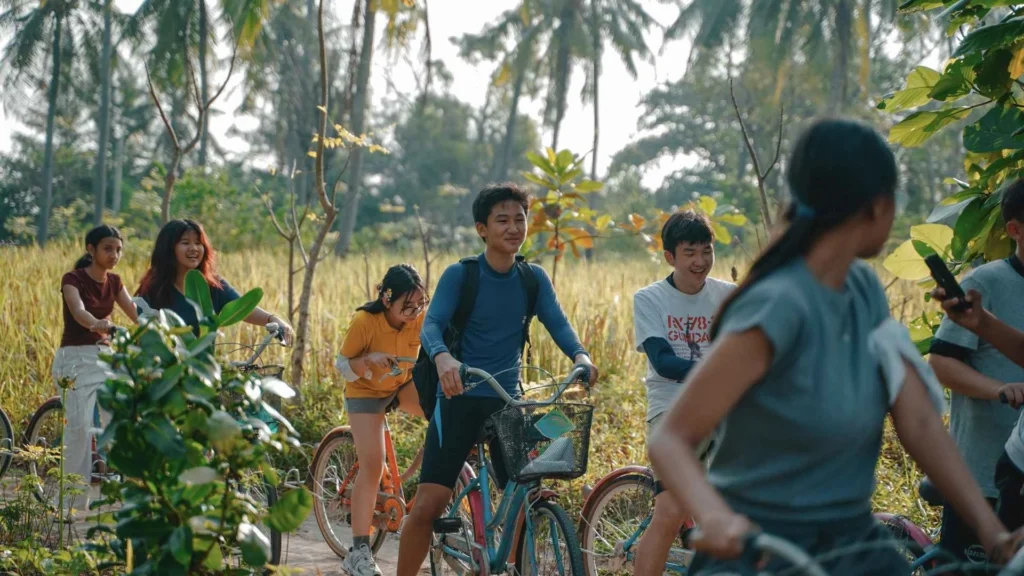
What is the difference between a Day Trip vs Multi-Day Trip for Schools?
Outdoor Education – Day Trip vs Multi-Day Trip for Schools designed to support curriculum-based learning through hands-on activities and guided reflection. A Multi-Day Trip extends learning over two to five days, allowing students to develop leadership, resilience, teamwork, and independence through immersive experiential learning.
School trips have long been part of education. They provide students with opportunities to explore museums, cultural landmarks, science centers, or natural environments beyond the classroom. However, many school trips still focus primarily on sightseeing rather than intentional learning. While students may enjoy the experience, the educational value often ends when the bus returns to school.
Today’s schools face a different challenge. Beyond academic achievement, educators are expected to develop critical thinking, collaboration, resilience, leadership, communication, and environmental responsibility. These competencies cannot be fully developed through lectures or textbooks alone. They require authentic experiences where students can apply knowledge, solve real problems, and reflect on their learning.
This is where Outdoor Education offers a meaningful alternative by Day Trip vs Multi-Day Trip for Schools.
Rather than viewing a school trip as a recreational activity, Outdoor Education transforms it into a carefully designed learning journey. Every activity has a clear educational purpose, measurable learning outcomes, and opportunities for reflection. Students are encouraged not only to observe their surroundings but also to participate, collaborate, make decisions, and connect their experiences with classroom learning.
One of the most common questions school leaders ask when planning an outdoor learning program is:
Should we choose a Day Trip vs Multi-Day Trip for Schools?
The answer depends not on the destination, but on the learning objectives your school hopes to achieve.
In this guide, we’ll explore the differences between Day Trips and Multi-Day Trips, their educational benefits, and how each can support experiential learning for students. Whether you’re a principal, curriculum coordinator, or teacher planning your next school program, understanding these differences will help you create learning experiences that are engaging, purposeful, and memorable.
Why Every School Trip Needs a Learning Purpose
Many schools invest significant time and resources in organizing excursions each year. Yet one important question is often overlooked:
What should students be able to know, do, or become after the trip?
Without clearly defined learning outcomes, even the most exciting destination can become little more than a recreational outing.
A well-designed Outdoor Education program begins with educational objectives rather than logistics. Instead of asking, “Where should we go?”, schools first ask:
- What competencies do we want students to develop?
- How does this experience support our curriculum?
- What kind of reflection will help students transfer learning into everyday life?
This shift changes the entire design of the program.
For example, a visit to a mangrove forest can become much more than an environmental tour. Students may investigate biodiversity, collect field observations, analyze ecosystem services, collaborate in small research teams, and reflect on how conservation relates to sustainable communities. The destination remains the same, but the learning experience becomes significantly richer.
Similarly, an overnight camp is not valuable simply because students spend a night outdoors. Its educational value comes from intentionally designed challenges that encourage leadership, communication, resilience, teamwork, and personal responsibility.
Outdoor Education follows the principles of Experiential Learning, where students learn through direct experience, guided reflection, conceptual understanding, and practical application. Rather than passively receiving information, learners actively construct knowledge by engaging with authentic situations on Day Trip vs Multi-Day Trip for Schools.
This approach helps students develop competencies that are increasingly important in modern education, including:
- Critical thinking and problem solving
- Collaboration and teamwork
- Leadership and decision-making
- Communication skills
- Environmental awareness
- Self-confidence and resilience
- Social and emotional learning
For schools implementing national curricula, Cambridge, IB, or other international programs, Outdoor Education also creates valuable opportunities to connect classroom concepts with real-world contexts while supporting inquiry-based and student-centered learning.
Ultimately, successful school trips are measured not by how many attractions students visit, but by how deeply the experience influences their understanding, behavior, and personal growth.
What Is a Day Trip in Outdoor Education?
A Day Trip is a structured outdoor learning program that takes place within a single day, typically lasting between four and eight hours. Unlike traditional excursions that emphasize sightseeing, an Outdoor Education Day Trip is intentionally designed around specific learning objectives and experiential activities.
The goal is not simply to expose students to a new environment but to create meaningful opportunities for exploration, collaboration, and reflection within a manageable timeframe.
Day Trips are particularly effective for schools seeking to enrich classroom learning without requiring overnight accommodation or extensive travel logistics. They provide an accessible entry point into Outdoor Education while maintaining strong educational value.
[Why Outdoor Education matter for students Learning]
Key Characteristics of a Day Trip
A well-designed Day Trip typically includes:
- Curriculum-connected learning activities
- Hands-on exploration and inquiry
- Team-based challenges
- Facilitated reflection sessions
- Risk-managed outdoor experiences
- Clear learning outcomes aligned with student development
Because the program is completed within a single day, students remain highly engaged while schools benefit from simpler scheduling, lower operational costs, and minimal disruption to academic calendars.
Typical Learning Outcomes
Depending on the program design, students may develop:
- Observation and inquiry skills
- Scientific thinking through field investigations
- Communication and collaboration
- Problem-solving abilities
- Environmental awareness
- Confidence in unfamiliar situations
Rather than measuring success by the number of activities completed, Outdoor Education focuses on the quality of learning that occurs throughout the experience.
Example Day Trip Experiences
A Day Trip program might include activities such as:
- Nature-based scientific investigations
- Biodiversity exploration
- Orienteering and navigation
- Environmental conservation projects
- Outdoor team challenges
- Cultural heritage exploration
- Sustainability workshops
- Reflection circles and learning journals
Each activity is intentionally facilitated to encourage students to connect experience with knowledge, helping them understand not only what happened but also why it matters.
Advantages of a Day Trip
Day Trips offer several advantages for schools:
- Easy to integrate into the academic calendar
- Lower logistical complexity
- Cost-effective for larger student groups
- Suitable for younger learners
- Strong curriculum integration opportunities
- Excellent introduction to Outdoor Education
For many primary and middle schools, Day Trips provide an ideal balance between experiential learning and operational practicality.
However, while Day Trips create meaningful learning experiences, the limited duration also means there are natural constraints on how deeply students can develop long-term interpersonal, leadership, and resilience skills.
What Is a Multi-Day Trip in Outdoor Education?
While a Day Trip provides a powerful introduction to experiential learning, some educational outcomes require more than a few hours to develop. Leadership, resilience, independence, and meaningful relationships are rarely built within a single day. They emerge through continuous experiences, challenges, reflection, and shared responsibility over time.
A Multi-Day Trip is an Outdoor Education program that typically lasts two to five days, allowing students to immerse themselves in a learning environment beyond the classroom. Rather than compressing activities into one day, a Multi-Day program creates space for progressive learning, where each experience builds upon the previous one.
This extended format enables facilitators to move beyond activity-based learning and guide students through a complete experiential learning cycle—experience, reflection, conceptual understanding, and application.
Key Characteristics of a Multi-Day Trip
Unlike traditional school camps that often focus on recreation, a well-designed Outdoor Education Multi-Day Trip includes:
- Curriculum-aligned learning objectives
- Progressive experiential learning activities
- Leadership and teamwork development
- Personal responsibility and independent decision-making
- Daily guided reflection sessions
- Environmental stewardship and sustainability practices
- Comprehensive risk management and safety planning
Because students spend several days together, learning extends beyond scheduled activities. Everyday situations—sharing responsibilities, solving unexpected problems, adapting to weather changes, or supporting peers—become valuable learning opportunities.
Typical Learning Outcomes
A Multi-Day Outdoor Education program can help students develop:
- Leadership and initiative
- Resilience and adaptability
- Emotional intelligence
- Collaboration under real-world conditions
- Critical thinking and decision-making
- Independence and self-management
- Environmental responsibility
- Stronger peer relationships
- Increased confidence in unfamiliar situations
These outcomes are difficult to achieve through classroom instruction alone because they require authentic experiences where students face real challenges and reflect on their responses.
Example Multi-Day Experiences
Depending on the school’s objectives, programs may include:
- Outdoor leadership expeditions
- Environmental conservation projects
- Community engagement and service learning
- Field ecology and biodiversity studies
- Navigation and journey-based learning
- Adventure-based team challenges
- Cultural immersion experiences
- Campcraft and outdoor living skills
- Daily reflection and personal journaling
Rather than measuring success by the number of activities completed, Multi-Day programs focus on how students grow throughout the entire learning journey.
Advantages of a Multi-Day Trip
Schools often choose Multi-Day programs because they:
- Provide deeper experiential learning
- Encourage stronger team development
- Allow meaningful leadership opportunities
- Build resilience through progressive challenges
- Strengthen teacher-student relationships
- Create memorable learning experiences with lasting impact
Although Multi-Day Trips require greater planning, logistics, and investment, they often deliver significantly greater educational value when aligned with clear learning objectives.
Day Trip vs Multi-Day Trip for Schools: Which One Is Right for Your School?
Choosing between a Day Trip and a Multi-Day Trip is not about deciding which option is “better.” Instead, it is about selecting the format that best supports your school’s educational goals, student age group, available time, and desired learning outcomes.
The following comparison can help school leaders make an informed decision.
| Criteria | Day Trip | Multi-Day Trip |
|---|---|---|
| Duration | 4–8 hours | 2–5 days |
| Primary Purpose | Curriculum enrichment | Holistic student development |
| Learning Depth | Focused and introductory | Progressive and immersive |
| Leadership Development | Limited opportunities | Extensive opportunities |
| Team Building | Short-term collaboration | Strong group dynamics |
| Reflection | One or two facilitated sessions | Continuous daily reflection |
| Student Independence | Moderate | High |
| Logistics | Simple | More comprehensive |
| Budget | Lower investment | Higher investment |
| Best For | Primary School, curriculum projects, field investigations | Middle School, High School, leadership camps, graduation programs |
One important misconception is that Multi-Day programs automatically produce better learning outcomes. In reality, program design matters far more than program duration.
A poorly planned three-day camp without clear learning objectives may deliver less educational value than a carefully facilitated one-day Outdoor Education experience.
Similarly, a Day Trip can produce outstanding learning outcomes when activities are intentionally connected to curriculum objectives, followed by meaningful reflection and classroom integration.
The quality of facilitation, learning design, and reflection ultimately determines the educational impact—not simply the number of days students spend outdoors.
When Should Schools Choose a Day Trip?
A Day Trip is often the best choice when schools need a focused learning experience that complements classroom instruction while remaining practical and cost-effective.
Consider a Day Trip if your school aims to:
- Support a specific curriculum unit or project
- Introduce students to Outdoor Education for the first time
- Conduct field investigations or environmental studies
- Strengthen classroom collaboration through short team challenges
- Minimize travel and accommodation requirements
- Provide meaningful learning within a limited academic schedule
For younger learners, particularly those in primary school, Day Trips offer an age-appropriate balance between exploration, structured learning, and student wellbeing.
They also work well as part of a broader Outdoor Education strategy, allowing schools to provide multiple experiences throughout the academic year instead of relying on a single annual excursion.
When Is a Multi-Day Trip the Better Choice?
Schools should consider a Multi-Day program when learning objectives extend beyond academic enrichment and focus on long-term personal development.
A Multi-Day Outdoor Education experience is particularly valuable when schools want students to:
- Develop leadership and initiative
- Strengthen resilience and perseverance
- Build stronger relationships within their cohort
- Experience greater personal responsibility
- Practice independent decision-making
- Engage in extended environmental or community-based projects
- Prepare for significant educational transitions, such as moving from primary to secondary school or graduating from high school
Because students live, learn, and solve challenges together over several days, Multi-Day programs create opportunities for authentic growth that are difficult to replicate in shorter experiences.
For many schools, these programs become defining moments in a student’s educational journey—not because of the destination, but because of the transformation that occurs through purposeful, well-facilitated experiences.
Transforming School Trips into Meaningful Experiential Learning
A school trip becomes truly valuable when students leave with more than memories—they leave with new perspectives, strengthened skills, and experiences they can apply in everyday life.
This transformation does not happen by accident. It happens through intentional learning design.
In Outdoor Education, activities are not the learning outcome; they are the learning medium. A hike is not simply about reaching the summit. A team challenge is not merely about winning. A conservation project is not just about planting trees. Each experience is carefully facilitated to help students discover insights, connect them to academic concepts, and apply those lessons beyond the program.
This philosophy is grounded in Experiential Learning, where students learn through a continuous cycle of experience, reflection, conceptual understanding, and application.
[Find out about Outdoor Education]
From Experience to Lasting Learning
An effective Outdoor Education program follows a structured learning process:
1. Experience
Students actively participate in authentic challenges rather than observing from the sidelines.
Examples include:
- Navigating forest trails
- Conducting biodiversity investigations
- Solving group problem-solving challenges
- Participating in environmental conservation projects
- Completing leadership initiatives
These experiences create emotional engagement, which significantly improves learning retention.
2. Reflection
Experience alone does not guarantee learning.
Students need structured opportunities to think critically about questions such as:
- What happened?
- Why did it happen?
- What did I contribute?
- What challenged me?
- What would I do differently?
Reflection transforms activities into meaningful learning experiences.
3. Conceptual Understanding
Facilitators help students connect their experiences with broader concepts.
For example:
- Communication during a navigation exercise becomes a discussion about effective teamwork.
- A failed shelter-building activity becomes an opportunity to explore planning, collaboration, and adaptive thinking.
- Environmental observations connect directly to classroom learning in science and geography.
This stage bridges practical experience with academic understanding.
4. Application
Finally, students consider how they will apply their new knowledge and skills back at school, at home, and within their communities.
This final step ensures learning continues long after the program ends.
Safety: The Foundation of Every Outdoor Education Program
Meaningful learning cannot occur unless students feel physically and emotionally safe.
Safety is often misunderstood as simply having first aid kits or emergency contacts. In reality, effective Outdoor Education requires a comprehensive risk management system that enables meaningful challenge while reducing unnecessary risk.
Professional Outdoor Education providers integrate safety into every stage of program planning—not as an afterthought, but as a core design principle.
Key components include:
Comprehensive Risk Assessment
Every activity should undergo a structured assessment that considers:
- Environmental hazards
- Weather conditions
- Student characteristics and abilities
- Equipment requirements
- Emergency access
- Supervision ratios
The goal is not to eliminate challenge but to ensure risks remain appropriate and manageable.
Qualified Facilitators
Experienced facilitators do far more than lead activities.
They:
- Manage group dynamics
- Facilitate experiential learning
- Monitor student wellbeing
- Adapt programs to changing conditions
- Respond effectively during emergencies
The quality of facilitation often determines the quality of learning.
Emergency Preparedness
Schools should expect every Outdoor Education provider to have:
- Emergency response procedures
- Medical support plans
- Communication protocols
- Evacuation procedures
- Incident reporting systems
Preparedness builds confidence for both educators and parents.
Child Protection and Student Wellbeing
A safe learning environment also includes emotional safety.
Students should feel respected, supported, and encouraged to participate without fear of embarrassment or unnecessary pressure.
The objective is appropriate challenge, not discomfort for its own sake.
How to Choose the Right Outdoor Education Program
Every school has unique educational priorities. A successful Outdoor Education program begins by identifying those priorities before selecting destinations or activities.
When evaluating a program, school leaders should ask the following questions:
Does the Program Have Clear Learning Outcomes?
The best programs begin with educational objectives rather than activity lists.
Ask:
- What competencies will students develop?
- How will success be measured?
- How are activities connected to curriculum goals?
Is Learning Intentionally Facilitated?
Activities alone do not create learning.
Look for programs that include:
- Structured reflection
- Facilitated discussions
- Student journals
- Debrief sessions
- Action planning
These components significantly increase educational impact.
Is Safety Integrated Into Program Design?
Safety should be visible throughout the planning process.
Consider whether the provider demonstrates:
- Formal risk assessments
- Qualified facilitators
- Emergency response planning
- Appropriate supervision ratios
- Medical preparedness
[Learn more about Outdoor Safety & Risk Management]
Can the Program Be Customized?
Every school community is different.
An effective Outdoor Education provider should be able to adapt learning experiences based on:
- Student age
- Curriculum
- Learning objectives
- School values
- Available time
- Budget
Customization creates stronger educational outcomes than one-size-fits-all programs.
Why Schools Choose Jelajah Outdoor
At Jelajah Outdoor, we believe that every school trip should contribute to student growth, not simply provide entertainment.
For more than 15 years, we have partnered with schools across Indonesia to design Outdoor Education programs that combine Experiential Learning, Safety, Quality, and Sustainability.
Our programs are built around three guiding principles:
Purpose Before Activities
Every activity is selected because it supports specific learning outcomes.
Students leave with meaningful experiences—not just photographs.
Safety as a Learning Enabler
We integrate internationally recognized outdoor risk management principles into program planning, allowing students to explore confidently within a well-managed environment.
Learning That Continues Beyond the Trip
Reflection, facilitated discussions, and post-program evaluation help students transfer outdoor experiences into everyday learning and personal development.
Whether your school is planning a one-day field experience or a multi-day leadership expedition, our goal remains the same:
To create learning experiences that inspire curiosity, strengthen character, and prepare students for life beyond the classroom.
Frequently Asked Questions for Day Trip vs Multi-Day Trip for Schools
Is a Day Trip suitable for all grade levels?
Yes. Day Trips can be designed for primary, middle, and high school students, with activities tailored to their developmental stage and curriculum objectives.
How many days should a Multi-Day program last?
Most schools choose programs lasting between two and five days, depending on learning objectives, travel distance, and available time.
Is Outdoor Education only for leadership camps?
No. Outdoor Education supports a wide range of learning goals, including science, geography, environmental education, teamwork, communication, wellbeing, and character development.
How is Outdoor Education different from a traditional school trip?
Traditional school trips often emphasize visiting destinations, while Outdoor Education focuses on achieving measurable learning outcomes through structured experiential learning and guided reflection.
Can programs be aligned with our curriculum?
Yes. Effective Outdoor Education programs should be designed to complement national, Cambridge, IB, or other school curricula while supporting broader student development goals.
How is student safety managed?
Professional providers use comprehensive risk management processes, qualified facilitators, emergency response planning, and ongoing supervision to create learning environments that are both challenging and safe.
Looking for an Outdoor Education Program That Aligns with Your Curriculum?
Choosing the right program is about more than selecting a destination. It’s about creating measurable learning outcomes while ensuring the highest standards of safety, quality, and student engagement.
Our team collaborates with schools to design customized Outdoor Education experiences that reflect your curriculum, school values, and educational objectives.
Start planning your next Outdoor Education program with confidence.