
When spectators arrive at an open water swimming event, they usually notice the excitement first. Athletes are warming up, volunteers are busy with final preparations, rescue boats idle just offshore, and the atmosphere is filled with anticipation before the starting horn.
What most people don’t see is everything happening behind the scenes to make sure that excitement can unfold safely.
Recently, the Jelajah Outdoor team had the privilege of supporting Open Water Swimming Safety Review for an international open water swimming event at Pantai Kedonganan, Jimbaran, Bali. Rather than managing race operations, our role was to observe, assess, and provide an independent perspective on the event’s safety systems. It meant looking beyond logistics and asking a simple but essential question:
If something unexpected happens today, is the team truly prepared to respond?
For us, that question shapes every safety review. It’s not about finding faults—it’s about understanding how people, procedures, equipment, and decision-making come together under real operational conditions.
Open Water Swimming Safety Review; Looking Beyond the Checklist
One common misconception is that a safety review is simply a matter of checking whether the required equipment is available.
- Are there enough rescue boats? Check.
- Is there a medical team on standby? Check.
- Are communication radios working? Check.
- While those questions are important, they only tell part of the story.
- What matters even more is how those resources work together during an actual emergency.
For example a Open Water Swimming Safety Review, could the rescue team reach the farthest swimmer within the expected response time? Would everyone understand the same radio terminology under pressure? If weather conditions changed rapidly, who would have the authority to suspend the race, and how would that decision be communicated across the water?
These questions rarely have answers on paper alone. Instead, they are best explored through observation, discussion, and engagement with the teams who will be making decisions on race day.
Every Venue Has Its Own Story
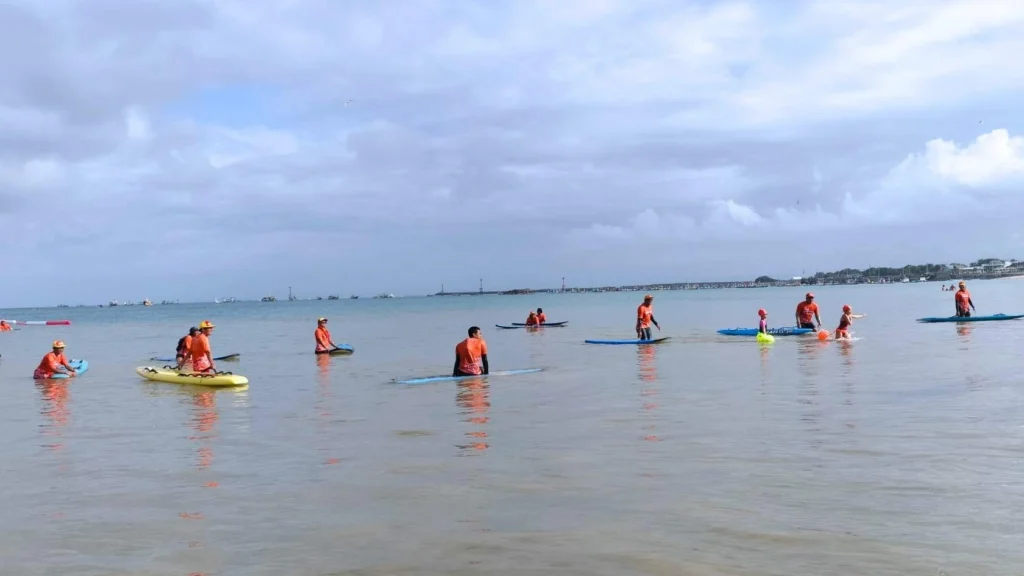
One of the first things we do during Open Water Swimming Safety Review is spend time on the course itself.
Standing on the shoreline at Pantai Kedonganan, the swim course appeared calm and well laid out. However, once we were on the water, we experienced the environment from the same perspective as the athletes and rescue teams.
The current behaved differently than it appeared from shore.
Wind direction shifted as the morning progressed.
Some buoys became less visible depending on the angle of the sun.
Meanwhile, distances that seemed short from the beach suddenly felt much greater when viewed from a rescue craft responding to a hypothetical emergency.
None of these observations were unexpected. In fact, they serve as a reminder that open water is dynamic. Conditions are constantly changing, which means safety planning must remain flexible enough to adapt.
Sometimes, improving safety doesn’t require additional equipment. It simply means repositioning a rescue boat, adjusting the placement of a marshal, or refining communication between teams to improve response efficiency.
Good Safety Is Really About Good Decisions
One lesson we’ve consistently learned through reviewing outdoor events is that incidents rarely occur because of one dramatic mistake.
More often, they develop from several small issues happening at the same time.
Perhaps the weather deteriorates faster than forecast.
A rescue boat is temporarily engaged elsewhere.
A swimmer requires assistance while communication becomes congested.
Different agencies use different terminology over the radio.
Individually, none of these situations are necessarily critical. However, when they occur together, they can increase operational risk significantly.
That’s why we spend a considerable amount of time while conducting Open Water Swimming Safety Review discussing decision-making with organizers.
Who monitors changing weather conditions?
At what point should the race be delayed or suspended?
Who makes that decision?
How quickly can information reach every official, rescue team, volunteer, and athlete?
Clear answers to these questions create confidence long before an emergency ever occurs.
The Best Safety Operations Are Often Invisible
Ironically, the best-managed events are often the least dramatic.
No emergency evacuations.
No missing swimmers.
No large-scale rescues.
No major medical incidents.
When the event concludes smoothly, spectators often assume everything simply went according to plan.
In reality, that outcome is usually the result of months of preparation, careful planning, collaborative discussions, equipment inspections, tabletop exercises, and countless operational decisions made before race day.
Good safety rarely attracts attention—and that’s exactly how it should be.
Collaboration Makes Safety Stronger
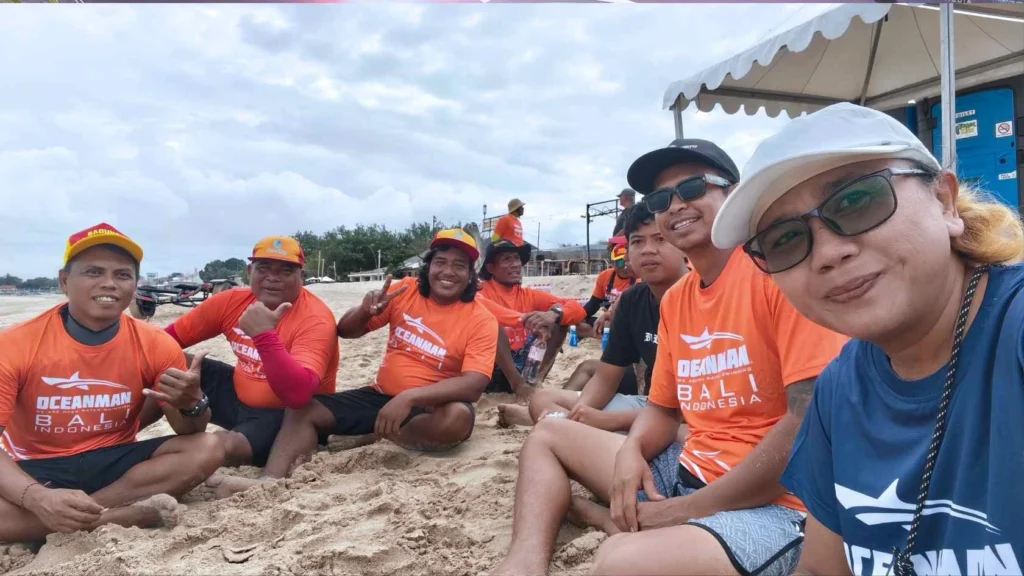
One aspect that stood out throughout this assignment was the collaborative attitude demonstrated by everyone involved.
We sincerely appreciate Millenium Aquatic Swimming Club and Avatara Lintas Media for recognizing that Open Water Swimming Safety Review are not audits designed to find mistakes, but opportunities to strengthen an already well-prepared event. Their openness throughout the review process allowed for meaningful discussions, honest reflections, and practical improvements that ultimately benefit every participant.
We would also like to acknowledge the incredible work of the entire Water Safety Team, especially the Local Lead Rescue and all rescue personnel operating on the water. Their commitment to maintaining high operational standards was evident throughout the event.
More importantly, they were exceptionally open in sharing operational information, explaining their procedures, discussing local conditions, and welcoming questions and recommendations from our team.
That level of transparency reflects a mature safety culture.
The strongest safety systems are built when organizers, rescue teams, medical personnel, and independent reviewers work together with a shared objective: creating the safest possible environment for everyone involved.
Every Review Is Also a Learning Opportunity
No two outdoor events are ever identical.
Every coastline presents different environmental challenges.
Every organizing committee brings different experience.
Every rescue team develops its own local knowledge.
For us, each review is therefore a two-way learning experience.
While we contribute structured risk management approaches and independent observations, we also learn from local expertise, practical field experience, and operational innovations developed by the teams on the ground.
That exchange of knowledge is what continually improves outdoor safety—not only for one event, but for future events across Indonesia.
Open Water Swimming Safety Review; Practical Takeaways for Event Organizers
Whether you’re planning an open water swimming race, a trail running event, or any outdoor activity, here are a few lessons worth remembering:
- Safety starts long before event day. Effective planning reduces the likelihood of preventable incidents.
- Understand your environment. Weather, terrain, currents, tides, and local conditions should shape your operational plans.
- Focus on decision-making, not just equipment. Having rescue assets is important, but knowing when and how to deploy them is even more critical.
- Encourage collaboration. Independent reviews work best when organizers and safety teams are open to discussion and continuous improvement.
- Conduct post-event evaluations. Every event provides valuable lessons that can strengthen future operations.
Building Safer Outdoor Experiences Together
At Jelajah Outdoor, we believe that safety is not about eliminating adventure—it is about preparing for it.
Whether supporting sporting events, expeditions, educational programs, or humanitarian field operations, our goal is always the same: helping organizations build practical, realistic, and resilient safety systems that work in real-world environments.
Our services include:
- Safety & Risk Management Trainings
- Outdoor Risk Assessments
- Emergency Response Planning
- Wilderness First Aid Training
- Field Safety Capacity Building
- Safety SOP Development
- Emergency Preparedness Exercises
- Operational Safety Audits
Because the best safety operation is rarely the one that performs the most rescues.
It’s the one that quietly prevents incidents from happening in the first place.
If your organization is planning an outdoor event or looking to strengthen its field safety systems, we’d be happy to start the conversation. Together, we can build safer, more resilient outdoor experiences for participants, teams, and communities alike.
Contact us for free consultation and start your outdoor safety journey.